Permacomputing
I’m typing this blog post on a tiny, cute, but powerful purple ARM computer in the hope that I will never have to buy a whole new machine to replace it. It’s called the MNT Pocket Reform, and it’s a compact 7-inch laptop with open hardware documentation and a modular internal architecture. It includes a clicky mechanical keyboard and a trackball within a portable form factor.
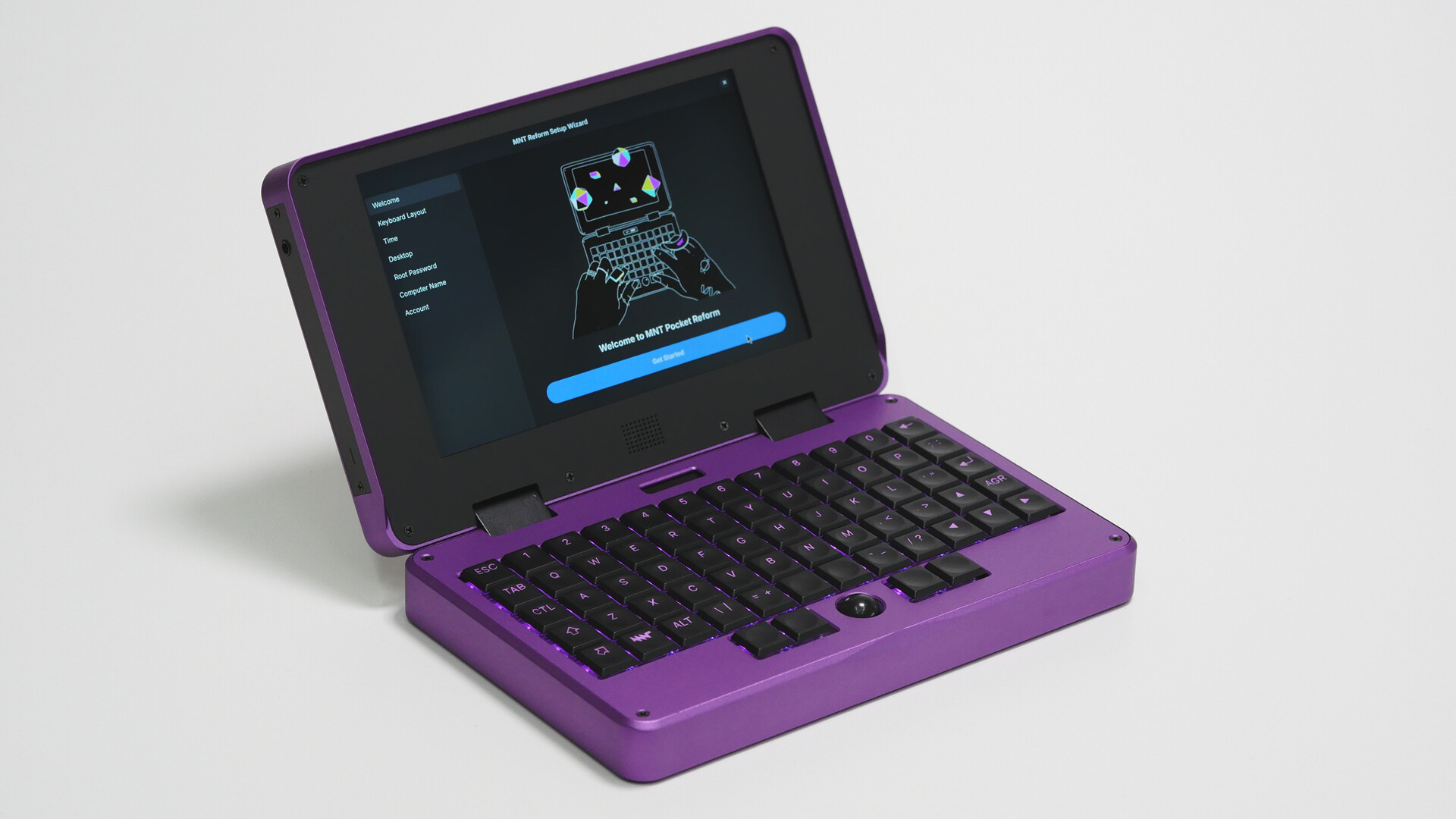
My little computer was built by MNT Research GmbH, a Berlin-based hardware manufacturer with very nice people building open-source computing devices in small batches. The company operates independently without external venture capital and develops computers whose hardware, firmware, and mechanical designs are released under open licenses, like the CERN Open Hardware Licence. Major components such as CPU modules, mainboards, keyboards, and battery assemblies are user-replaceable. This approach is intended to extend device lifespan and support repairability. Even more sustainability comes from an active user community that contributes documentation, repairs, and custom modifications.
Is it a computer for everyone? Probably not. The small batches and the European production come with a price that is higher than conventional consumer hardware. I like that one review called the MNT devices “brutalist” — some people absolutely love brutalism, some hate it passionately. But the combination of transparency, modularity, and long-term repairability makes the little computer a good example of permacomputing.
From Permaculture to Permacomputing
Permacomputing is a term that combines “perma” — as in permaculture — with “computing,” signaling an effort to rethink digital technology not as a disposable commodity but as a domain that can be part of sustainable, cyclical, and regenerative practices. Instead of equating technological progress with ever-increasing performance, bigger infrastructures, and rapid replacement cycles, permacomputing asks how digital systems can exist within ecological and planetary limits and still remain meaningful and functional.
Importantly, permacomputing is not a fixed methodology or toolkit but a community of practice — a collaborative and evolving field of experimentation. It values openness and community, encouraging systems that can be understood, modified, repaired, and shared. This communal aspect stands in contrast to proprietary black-box technologies. It’s also very solarpunk: In a solarpunk forum, the permacomputing movement’s priorities were summarized as “an amazing step toward reframing our ideas about technology and some of the ways that we can mine the trash instead of the earth. Use what we have instead of infinite growth, and really start questioning how, why and when we use technology. ”
In their paper “Permacomputing Aesthetics: Potential and Limits of Constraints in Computational Art, Design and Culture” Aymeric Mansoux, Brendan Howell, Dušan Barok, and Ville-Matias Heikkilä called permacomputing “a potential field of convergence between technology, cultural work, environmental research, and activism.” The activism part emphasizes the ecological, social, and political dimensions of computing. Technology is deeply entwined with global supply chains, extractive mining, energy-intensive infrastructures, and unequal forms of labor and resource distribution. The movement is thus — according to permacomputing.net — “driven by several strands of anarchism, decoloniality, intersectional feminism, post-marxism, degrowth, ecologism.”
Permacomputing is about care in an uncaring world. The looks of my cute little purple computer are a wonderful symbol of that.